Custom care for the candy-laden milk-teeth smiles of your little ones. We keep visits fun, educational, and completely stress-free.
Child-Friendly Dental Care
A positive dental experience during childhood helps build healthy oral habits that last a lifetime. At Chitra Dental Clinic, we provide gentle and child-friendly dental care in a comfortable environment where children feel safe, relaxed, and cared for. Our approach focuses on making every visit a positive experience while supporting healthy dental development from an early age.
Preventive Dentistry
Preventive dental care is the best way to protect your child’s teeth from cavities and other oral health problems. Regular dental check-ups, professional cleaning, fluoride treatments, and guidance on proper brushing and nutrition help maintain healthy teeth and gums. Our pediatric dentist in Chennai focuses on early prevention to minimise the need for complex treatments later.
Common Dental Problems
Children may experience a range of dental concerns, including tooth decay, cavities, gum infections, early tooth loss, thumb-sucking effects, and misaligned teeth. Identifying these issues early allows timely treatment and supports proper oral development. We carefully assess each child’s dental health and recommend personalised treatment based on their age and specific needs.
Why Parents Choose Us
For over 40 years, families have trusted Chitra Dental Clinic for compassionate and ethical dental care. Our team understands the unique needs of young patients and takes the time to explain treatments, ease dental anxiety, and create a friendly experience for both children and parents. We believe every child deserves a healthy smile built on trust and preventive care.
Book a Checkup
Regular dental visits help detect problems early and keep your child’s smile healthy as they grow. Book a dental check-up at Chitra Dental Clinic in West Mambalam and give your child the benefit of expert pediatric dental care in a welcoming and supportive environment.
Severe tooth decay (caries) on primary front teeth restored using cosmetic pediatric crowns to restore aesthetics, confidence, and chewing function.
Before Treatment
After Treatment
Space Maintainers in Paediatric Patients
Custom-fabricated space maintainer to prevent neighboring teeth from shifting after early loss of a primary tooth, preserving space for permanent teeth.
Clinical & X-Ray View
About the Procedure & FAQ
Below are answers to the most common questions, concerns, and procedural details regarding Pediatric Dentistry (Kids Care) at Chitra Dental Clinic.
It is good to consult the dentist by six months of age, when the first milk teeth generally emerge. Regular visits will help give adequate preventive care to the child that will prevent dental decay. If there are any cavities, it is good to undertake treatment early on. These regular visits are advised even if you think the baby’s teeth are healthy. Regular visits also help the child get used to the idea of visiting the dentist before he/she needs any treatment to be administered.
It is normal to find the milk teeth in children to be spaced. These spaces between the teeth help later in accommodating the bigger permanent teeth. Thus, absence of spaces between the milk teeth in children may be a forewarning that the child may not have adequate space to accommodate the bigger permanent teeth which may erupt in a crowded arrangement.
Teething is often blamed for systemic conditions like diarrhea, vomiting and fever. The possible explanation is that during teething the child tends to chew objects for relief, which at times may not be clean/sources of microbes. The discomfort associated with teething can be relieved to a certain extent by using teething gels (anti-inflammatory analgesics), which can be massaged over the gums. Teethers of different types are available, on which the child can chew on for relief.
Infant’s teeth can be cleaned with a soft cloth wrapped around the index finger. Wet the cloth and rub gently over the teeth to clean them. Small soft brushes that can be inserted over your fingers are available that can be used to clean the teeth.
You can introduce a baby-sized toothbrush at around 12 months of age, encouraging the child to use the brush himself/herself. Though the child may play with it rather than brush his teeth, it will ensure good lifelong habits in your child. This should be followed by the parent properly brushing the child’s teeth for him.
Initially for a toddler, a wetted toothbrush is enough to brush the teeth. Once the child has learnt to rinse his/her mouth and spit, you can start using a pea-sized helping of fluoride toothpaste. Most dentists advise using fluoride toothpastes around three years of age. If you think your child may swallow the toothpaste, you can use a non-fluoridated one until he/she learns to spit it out.
A.K.A. ‘rampant caries’, it is a form of dental caries which may involve several teeth in the mouth, including ones generally considered resistant to dental decay. It is usually associated with prolonged bottle feeding of sugar containing drinks such as milk and juices. It may occur due to bottle-feeding at bedtime or during sleep and lack of cleansing of the teeth thereafter. It can also occur due to prolonged on-demand breast feeding at night due to lactose sugar present in the milk. This form of dental decay affects many teeth and may be marked by discoloration of the teeth. In later stages, teeth may even fracture. The child often experiences pain on brushing and eating cold or hot food substances.
In some children the grinding surface of the teeth tends to have very deep pits and grooves which tend to accumulate food, plaque and microbes. For such teeth, the dentist may use appropriate pit-and-fissure sealants to reduce their depth.
Sometimes a milk tooth may have to be extracted (due to dental decay or some other cause) much before the permanent tooth is ready to replace it. In such cases the early extraction of the milk tooth may cause the neighboring teeth to move into the space and thus prevent the underlying permanent tooth from erupting into its correct position. To avoid this the dentist may use a ‘space maintainer’ till the permanent teeth that replaces the milk teeth are ready to erupt.
It is considered quite normal for children to suck their finger up to around 3 years of age. Continued finger sucking may cause serious defects in the developing oral and facial structures though.
Many children develop this habit of sucking the thumb/other fingers. Several possible causes exist:
Lack of adequate nursing or feeding.
Feeling of insecurity.
Sudden change in domestic or work atmosphere which the child cannot cope with.
Stress related to school, friends, etc.
Finger sucking may not cause irreversible harm in children less than 3 years of age. However, much depends on the duration, intensity and frequency of the habit. Continuation of the habit beyond 3 years may pose problems for the developing facial and dental structures. The teeth can come forwards and open bite can occur.
Many children stop sucking the thumb when the causative factor is identified and eliminated. Timely nursing, feeding, and increasing the time spent with the child may decrease insecurity. Slightly older children can be reasoned out of the habit by explaining the bad effects of the habit. The dentist may sometimes advice the use of finger bandaging/bitter medicine to make the habit less pleasurable. When these simple steps fail the dentist may advice a ‘habit breaker’, which is placed behind the front teeth, and prevent the child from sucking the thumb.
Thumb sucking can cause problems if allowed to persist beyond 3 years of age. Some of the effects include the front teeth being pushed too far forward, wide spacing of the teeth, and poor facial appearance. Continued indulgence may cause defects in the developing jaw & facial bones.
Habits like biting nails, pencils, etc., besides causing wear of the teeth can cause injury to the gums and supporting structures around the teeth. In addition, the pressures they exert on the teeth may force them into abnormal positions which may necessitate orthodontic treatment.
Tongue thrusting is a habit wherein the person forces the tongue against the back surface of the front teeth while swallowing. This can produce proclination of the front teeth and spaces between them. The dentist may have to train the patient on the correct swallowing method by some exercises and use of habit breaking devices.
The causes of tooth decay in children are the same as in adults, but the progress is faster. An important factor in children responsible for causing tooth decay is the child being bottle-fed and put to bed without brushing. This way, even 2-year-old children can develop cavities.
Teeth do not erupt with cavities. Cavities form only because of diet and improper oral hygiene.
Never ignore cavities in milk teeth. Although baby teeth eventually fall out, untreated decay can spread, cause severe pain, create abscesses, and damage the permanent teeth developing underneath. It can also lead to speech, chewing, and alignment issues.
Four key preventive steps include:
Clean early: Wipe your baby’s gums and emerging teeth with a clean, damp cloth after feedings.
Brush with fluoride: Start brushing with a rice-grain-sized amount of fluoride toothpaste as soon as the first tooth appears. For children over three, use a pea-sized amount.
Avoid night bottles: Do not let your baby fall asleep with a bottle of milk or juice. Saliva flow decreases during sleep, allowing sugars to pool and erode the teeth.
Limit sugary snacks: Restrict sticky and sugary treats, and avoid frequent snacking to reduce the number of acid attacks on tooth enamel.
Cavities won’t automatically spread from milk teeth to permanent teeth, but the permanent teeth are at a higher risk. Untreated decay can cause underlying infections that damage the enamel of the adult tooth below, and the same cavity-causing oral bacteria will be present when the new teeth erupt.
Milk teeth generally do not need to be removed prematurely and will naturally fall out as permanent teeth push through. However, dentists may recommend extraction if a tooth is severely decayed, infected, causing pain, blocking an adult tooth (“shark teeth”), or if early extraction is required for orthodontic space management.
Even though they are temporary, milk teeth play a vital role in proper chewing, speech development, and holding space for adult teeth. If a milk tooth must be removed too early, a dentist may place a space maintainer to prevent neighboring teeth from shifting and blocking the incoming permanent tooth.
A pulpectomy is a dental procedure that involves the complete removal of the pulp (the soft, living tissue containing nerves and blood vessels) from both the crown and root canals of a tooth. It is most commonly performed on baby teeth to save them from severe decay or infection.
A space maintainer is a custom-made dental appliance (metal or acrylic) used to hold the gap open after a baby tooth is lost prematurely. It prevents neighboring teeth from drifting into the empty space, ensuring there is enough room for the permanent tooth to erupt correctly later.

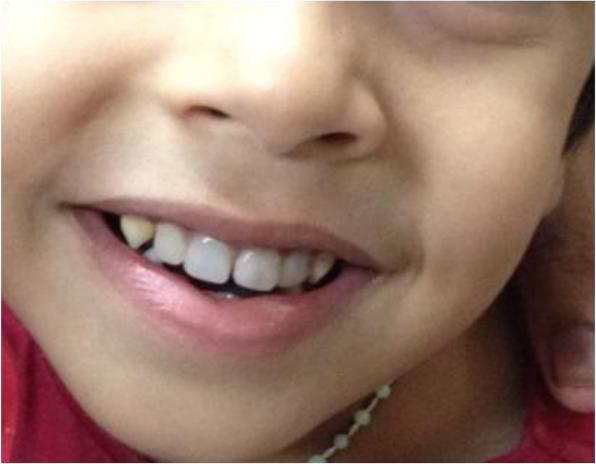 Before Treatment
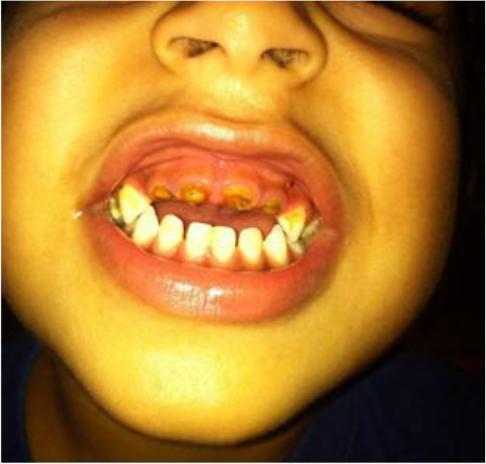 After Treatment
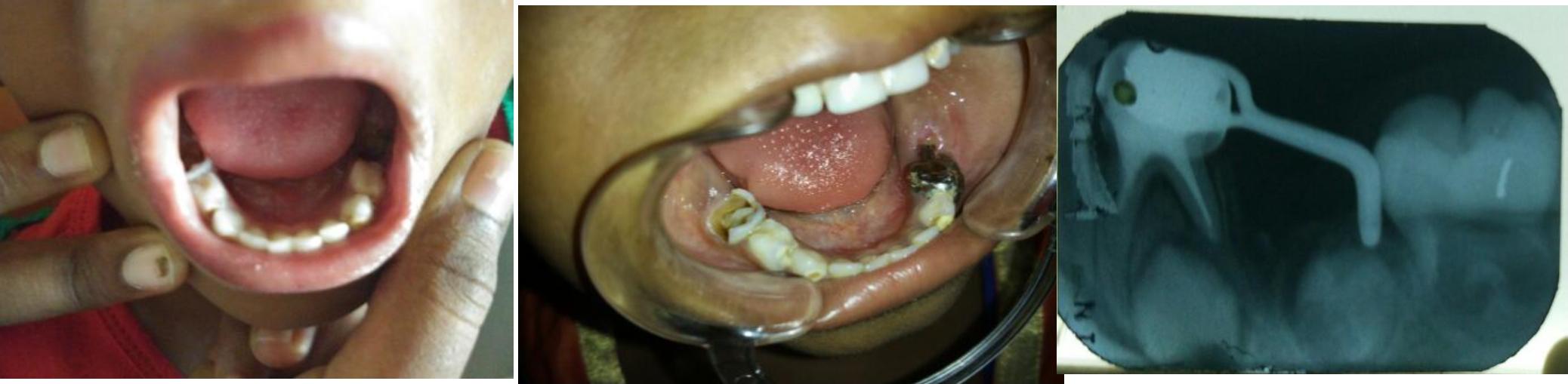 Clinical & X-Ray View