
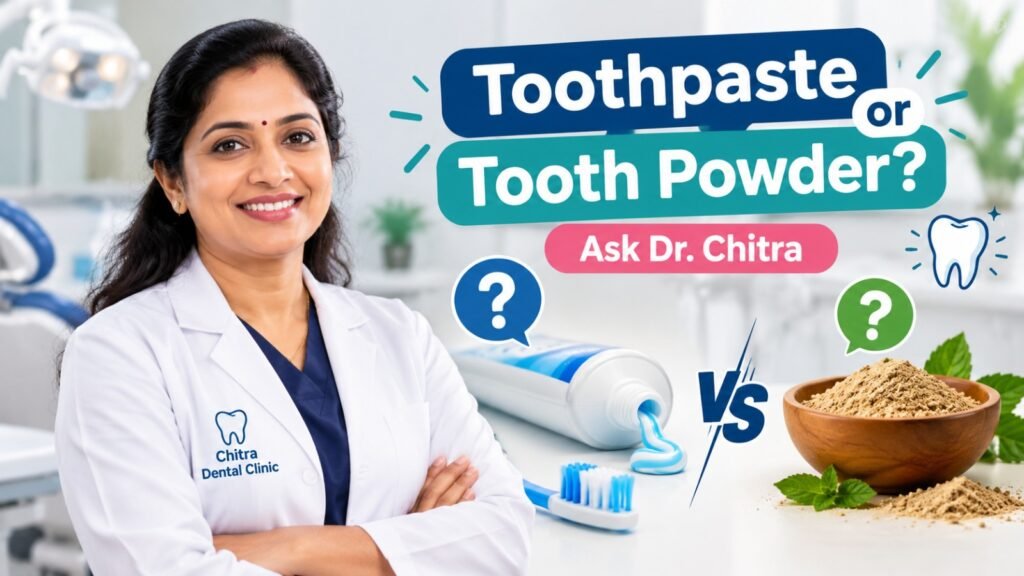
For most families, a fluoride toothpaste used the right way is still the safest daily choice for preventing cavities. Herbal and “natural” products can clean well. But many of them leave out the one ingredient that protects against decay. Before you switch, check the label, not the advertisement.
TL;DR
- “Natural” and “chemical-free” describe marketing. They don’t tell you whether a product protects against cavities.
- Fluoride toothpaste at 1,000 to 1,500 ppm, used twice a day in the recommended amount, helps protect against cavities.
- Many tooth powders have no fluoride, and some may be abrasive enough to wear down teeth.
- Children need a rice-grain smear under age 3 and a pea-sized amount from ages 3 to 6.
Not sure about yours? Bring your toothpaste tube to our clinic and we’ll read the label with you.
Why Is Everyone Suddenly Talking About Fluoride-Free Toothpaste?
Scroll through reels this year and you will see it: neem, clove, charcoal, “chemical-free,” and “no fluoride.” Patients bring these questions to me every week. Some worry that fluoride is harmful. Others simply like the idea of something traditional.
I understand both. Wanting fewer chemicals in your home is a good instinct. The question is whether the product you choose still does its main job.
Dr. Chitra’s own note: My advice is to choose a fluoride toothpaste and brush gently twice a day with a soft-bristled toothbrush. The right oral hygiene routine, along with regular dental check-ups, helps maintain healthy teeth and gums.
Is Fluoride in Toothpaste Safe?
Yes. When it is used in the recommended amount, fluoride toothpaste is safe for daily use. Major dental bodies around the world recommend it.
Much of the worry comes from something different: fluoride in groundwater. Some parts of India have naturally high fluoride in well or borewell water, and that can mark the teeth over many years. That is a water issue. Brushing twice a day and spitting out the paste is not the same as drinking high-fluoride water every day.
If your family drinks borewell water, tell us at your visit. We’ll consider it when we give advice.
What Does Fluoride Actually Do for Your Teeth?
Every time you eat something sweet, the germs in your mouth make acid. That acid softens the outer layer of your tooth, a little at a time.
Fluoride works like a fresh coat of paint on a wall that faces the rain. It strengthens the surface so each acid attack does less damage. It can even help repair very early weak spots before they become holes.
One tip most people miss: At night, spit out the toothpaste but don’t rinse with a mouthful of water. The thin layer that stays behind keeps protecting your teeth while you sleep.
Is Herbal or Ayurvedic Toothpaste Bad?
No, not by itself. Many herbal pastes clean plaque well and feel fresh. The question to ask is simple:
It’s not “natural versus chemical.” It’s “does this protect against cavities, or only clean?”
Turn the tube over and check the ingredients:
- If you see sodium fluoride, sodium monofluorophosphate, stannous fluoride or amine fluoride, the paste contains a fluoride ingredient that helps protect against cavities.
- If it says “fluoride-free,” it may still clean well, but you are giving up established fluoride-based protection. For a child or anyone who gets cavities often, that is an important trade-off.
Is Tooth Powder Better Than Toothpaste?
Many of us grew up with tooth powder, so I understand why it feels right. Two things to know:
- Most tooth powders have no fluoride. They clean the surface, but they don’t provide the same fluoride-based protection against decay.
- Some powders are rough. Brushing with a harsh powder every day is like cleaning a steel vessel with sand. It looks shiny, but the surface slowly wears away. Over time this can cause sensitivity, especially where gums have pulled back.
If you have bleeding gums, receding gums or persistent tooth sensitivity, it is worth getting them checked. Read more about gum disease and periodontal care to understand why healthy gums matter.
Please avoid homemade mixtures of charcoal, salt, or baking soda for daily brushing. If you love your powder, show it to us. We’ll tell you honestly whether it suits your teeth.
What About Hydroxyapatite Toothpaste?
You may have seen this word in ads. Hydroxyapatite is a mineral similar to what your enamel is made of. Early research is promising, and it may help some people with sensitivity. However, it does not yet have the long track record fluoride has. If you are curious about it, discuss it with your dentist instead of deciding from a reel.
How Much Toothpaste Should My Child Use?
This matters more than the brand. Good brushing habits and the right amount of toothpaste are important from the time the first teeth appear.
- Under 3 years: a smear the size of a grain of rice.
- 3 to 6 years: a pea-sized amount.
- An adult should brush the child’s teeth or supervise, and teach them to spit the paste out.
More paste does not mean cleaner teeth. The right amount and gentle brushing are what help. For additional guidance on your child’s oral health, explore our pediatric dentistry services.
So, Should Your Family Switch?
Ask yourself three questions:
- Does anyone in the family get cavities often? If yes, ask your dentist about appropriate fluoride protection.
- Does your product list fluoride on the label? If not, you may be giving up established fluoride-based cavity protection.
- Are your teeth sensitive, or are your gums pulling back? If yes, avoid rough powders.
If you’re still unsure, don’t guess from a label or an influencer. A dentist can help you choose a toothpaste based on your oral health, cavity risk and individual needs.
Bring Your Toothpaste to Dr. Chitra’s Dental Clinic
Next time you visit, bring the toothpaste or powder your family uses. We’ll read the label together, check your teeth and gums, and tell you plainly what suits you, your children and your parents. No lecture, and you don’t need to buy anything.
Address:
Arya Gowda Road, West Mambalam, Chennai
Phone / WhatsApp:
7397443366
Timings:
- Monday–Saturday: 9:00 AM–1:00 PM and 5:00 PM–9:00 PM
- Sunday: Closed
Ready to take the next step? Arrange a preventive dental check-up or contact Chitra Dental Clinic to discuss your family’s dental health.
Frequently Asked Questions
Is fluoride toothpaste safe for children?
Yes, when used in the recommended amount. Use a rice-grain smear under age 3 and a pea-sized amount from ages 3 to 6. Supervise brushing so the child spits out the paste instead of swallowing it.
Can I use herbal toothpaste instead of fluoride toothpaste?
Check the label. Some herbal pastes contain fluoride, and many don’t. A fluoride-free herbal paste can clean well, but it won’t provide the same established protection against cavities.
Is tooth powder bad for teeth?
Not always. However, many powders have no fluoride, and some are rough enough to wear enamel or cause sensitivity with daily use. Ask your dentist before using one every day.
Should I rinse after brushing at night?
Spit out the extra paste, but avoid rinsing with a lot of water. The thin layer left on your teeth helps keep fluoride in contact with them.
Where can I get my toothpaste checked in West Mambalam?
Bring your toothpaste or tooth powder to Dr. Chitra’s Dental Clinic on Arya Gowda Road. We’ll look at the label and your teeth together and suggest what suits your family. Contact the clinic to arrange a visit.
This article is for general education. It does not replace an examination by your dentist. Advice may vary with your dental and medical history.